At a glance
- Year: 1881
- Location: Amsterdam
- Story status: Confirmed
Who and where
- Breweries:
- Key people:
From Winter Ice to Engineered Cold
By the early 1880s, Heineken’s success with lager brewing had created both opportunity and pressure. Producing bottom-fermented beer required consistently low temperatures — something brewers had traditionally achieved using natural winter ice harvested from canals and lakes.
In Amsterdam, this ice was plentiful during cold winters. But during warmer months, ice had to be imported from Norway, making brewing dependent on unpredictable weather and expensive logistics.
For a brewery determined to deliver consistent quality, this reliance on nature posed a serious limitation.
Learning from Carlsberg
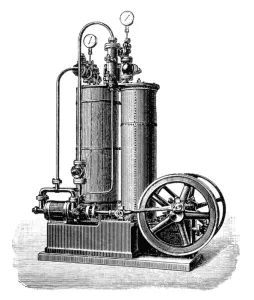

Heineken’s brewing director Feldmann closely followed developments in refrigeration technology across Europe. Through professional connections within the brewing industry, he visited the Carlsberg Brewery in Copenhagen, where German engineer Carl von Linde’s cooling machines were already in operation.
Impressed by the reliability and precision of the system, Feldmann advocated strongly for adopting Linde’s refrigeration technology in Amsterdam.
His recommendation marked a turning point. Mechanical cooling would no longer be experimental — it would become essential infrastructure.
Brewing Becomes Independent from Climate
With the installation of the Linde cooling system around 1881, Heineken gained the ability to brew throughout the year while maintaining stable fermentation temperatures.
The impact was profound:
- Brewing schedules became predictable
- Beer quality became more uniform
- Production capacity increased significantly
For the first time, Heineken could maintain its brewing standards regardless of seasonal temperature changes.
Cold was no longer harvested.
It was manufactured.
Expansion and Industrial Scale
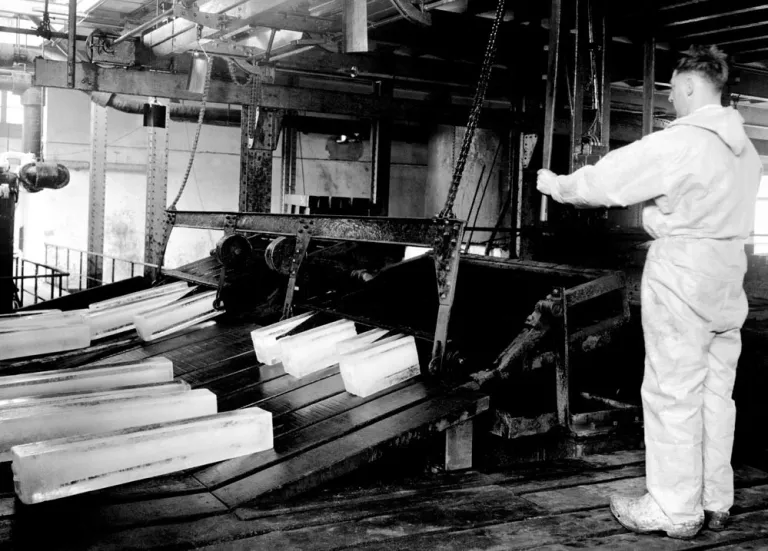
The installation of mechanical refrigeration equipment at Heineken’s Amsterdam brewery marked a decisive shift toward scientifically controlled brewing conditions. By approximately 1881, a Linde ice machine had been installed, allowing the brewery to produce artificial ice on an industrial scale, with reported production capacity reaching roughly 1,000 kilograms per hour.
Beyond brewing itself, artificial ice production transformed cellar management, yeast preservation, and fermentation stability. The technology reduced dependence on natural winter ice and enabled more reliable year-round lager production.