At a glance
- Year: 1902–1905
- Location: Amsterdam / Rotterdam
- Story status: Historical Interpretation
Who and where
- Key people:
Connected to
- Featured beers:

At the beginning of the twentieth century, brewing was changing. Beer was no longer judged only by taste and tradition. It was being tested, measured, and analysed in laboratories.
Between 1902 and 1906, Heineken experienced a period of scientific scrutiny that would quietly reshape the brewery’s future.
What began as a troubling report would lead to stronger quality control, stricter raw material selection, and a breakthrough in export stability.
1902 — A Difficult Question
In 1902, the Dutch Health Commission analysed several beers. Their findings suggested that Heineken’s beer contained higher levels of arsenic than others tested.
Arsenic was not an added ingredient. At the time, small traces could appear in malt or other raw materials, especially when fuel-dried. Still, the word alone carried weight.
For any brewery, this was serious.
Instead of dismissing the report, director J. Petersen reacted immediately. He turned to Dr. Hartog Elion, head of the laboratory, asking for careful investigation.
Were the levels dangerous?
Could filtration influence results?
Should independent chemical experts be consulted?
This was not a scandal — but it was a wake-up call.
Science and Practice
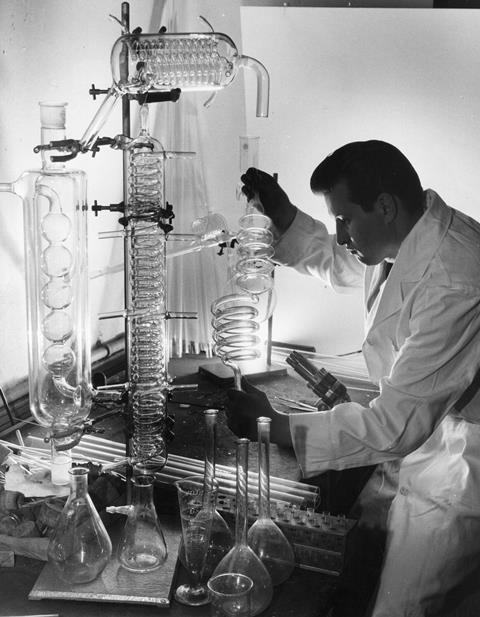
The debate revealed something deeper: the growing importance of science inside the brewery.
Letters from this period show Petersen pushing for stronger cooperation between management and laboratory research. He believed that scientific work should directly support practical brewing decisions.
It was not always a smooth relationship. Differences in approach and urgency became visible. But one thing was clear:
Quality could no longer rely only on tradition. It had to be proven.
1904 — Rethinking the Raw Materials
The investigation led to stricter attention to ingredients.
In 1904, a decision was made to stop purchasing English malt. Quality was considered below the desired standard. From then on, malt was sourced primarily from Central European producers.
This was not a small adjustment. It meant reorganising supply chains and relying on long-established relationships with trusted suppliers.
The message was clear:
If there was doubt about quality, the solution was not explanation — it was improvement.
Searching for Stability
The early 1900s were also a time when breweries across Europe were trying to solve another problem: stability during long-distance export.
Beer shipped to warm climates often spoiled before arrival. German breweries were investing heavily in sterilisation and pasteurisation techniques.
Heineken did not want to fall behind.
Discussions began around new methods, including ozone treatment and improved sterilisation processes. These experiments required investment, debate, and careful testing.
1906 — A Breakthrough
By 1906, the efforts produced results.
Heineken was now able to export to tropical destinations in the same way as leading German breweries. Beer could travel further and remain stable.
This was not just a technical achievement.
It meant access to new markets.
It meant confidence in long-distance trade.
It meant the brewery had strengthened itself after scrutiny.
A Turning Point
What began as a difficult question about arsenic had evolved into something larger.
Between 1902 and 1906, Heineken:
• Strengthened laboratory authority
• Tightened raw material standards
• Improved sterilisation methods
• Enhanced export durability
• Aligned science and brewing more closely
This period marks one of the earliest moments when Heineken proved that reputation would be protected not by denial, but by investigation and improvement.
A Legacy for the Next Generation
The book notes that under Petersen’s influence, the young Henry Pierre Heineken developed an interest in the scientific side of brewing.
That matters.
Because when Henry Pierre later led the company, quality control, export stability, and careful sourcing were already part of the brewery’s DNA.
This period did not create headlines. But it quietly strengthened the foundations of a global brewery.Privacy and cookie settings
Managed by Google. Complies with IAB TCF. CMP ID: 300