At a glance
- Year: 1949–1952
- Location: Amsterdam
- Story status: Confirmed
Beer Returns to Public Life
For years, beer had been rationed, diluted, regulated.
It existed — but it did not flourish.
After the war, production slowly stabilized. Ingredients improved. Quality returned. But beer did not automatically find its way back to the Dutch consumer.
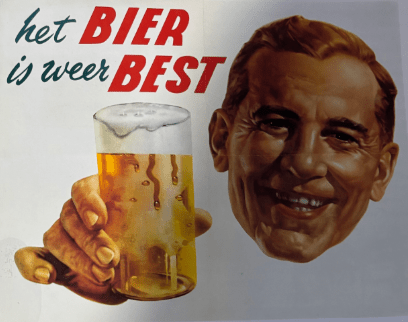
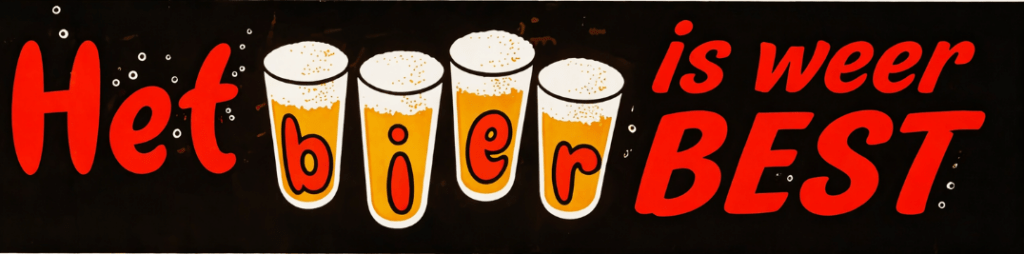
In 1949, the Dutch brewers — united through the Centraal Brouwerij Kantoor (CBK) — launched a collective campaign with a simple, confident message:
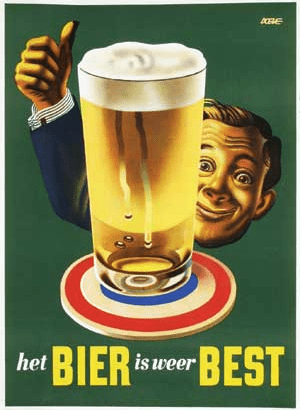
“Het bier is weer best.”
The beer is good again.
It was not a brand slogan.
It was a national statement of recovery.
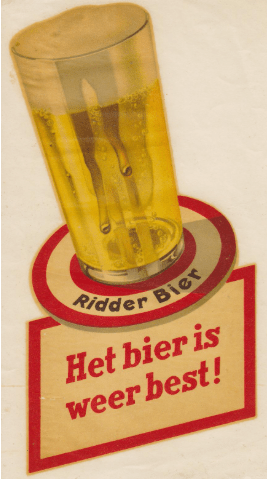
Posters appeared across the country. In 1950, a short film carrying the same title was screened in 45 Dutch cinemas. The campaign extended beyond advertising: instruction booklets on proper beer handling were distributed to tens of thousands of hospitality venues. Tap installations were inspected and cleaned. A “mystery man” visited cafés to assess the quality of the pour.
Beer was not only being promoted — it was being restored.
The message reached both consumer and publican: quality had returned, and it mattered.
Between 1949 and 1955, roughly 3.5 million guilders were invested in collective promotion. Domestic beer sales rose by 50 percent.
The campaign worked.
The Beginning of a Shift
Yet collective success carried a paradox.
By strengthening beer as a category, the campaign risked softening individual brands. In 1949, Dutch breweries had agreed not to pursue individual advertising for three years. But as the market expanded, differentiation became inevitable.
By 1952, the agreement was terminated.
In November 1965, the long-running “Het bier is weer best” campaign formally concluded. By then, eight million guilders had been invested. The foundations of post-war Dutch beer culture had been laid.
Collective advertising had rebuilt the market.
Individual brands would now shape its future.