At a glance
- Year: 1870
- Location: Amsterdam
- Story status: Confirmed
The Birthplace Changes Role
By 1870, Heineken had already begun its transformation from a traditional city brewery into a modern industrial brewer. Brewing operations had moved to the new, larger facility in Amsterdam, designed to support growing production and expanding demand.
But the original brewery complex — De Hooiberg, where Gerard Adriaan Heineken began his brewing journey — did not disappear.
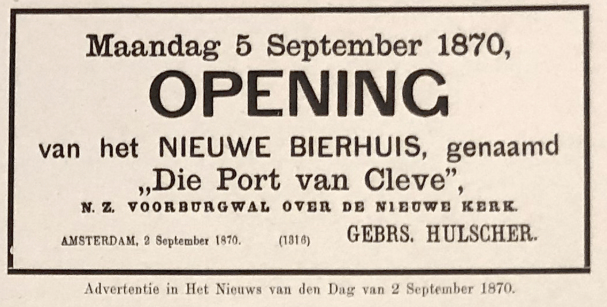

Instead, the historic site entered a new chapter.
Part of the former brewery was transformed into a beerhouse that would become known as Die Port van Cleve, preserving the birthplace of Heineken as a place of hospitality and memory rather than production.
The Transformation of De Hooiberg

De Hooiberg had served as Heineken’s first brewing site since 1864. Located along Amsterdam’s historic canal district, it represented the company’s origins as a local urban brewery.
As brewing technology advanced and demand increased, Heineken required a facility capable of supporting industrial-scale production. The new brewery made this possible, allowing De Hooiberg to transition away from brewing operations.
Rather than closing the site entirely, sections of the complex were repurposed. The buildings that once housed brewing equipment were adapted for public hospitality and beer service.
This transition reflected a broader change occurring throughout Europe, as breweries moved toward larger, specialised production facilities while older urban sites were reimagined for new uses.
Discovering “Die Port van Cleve”
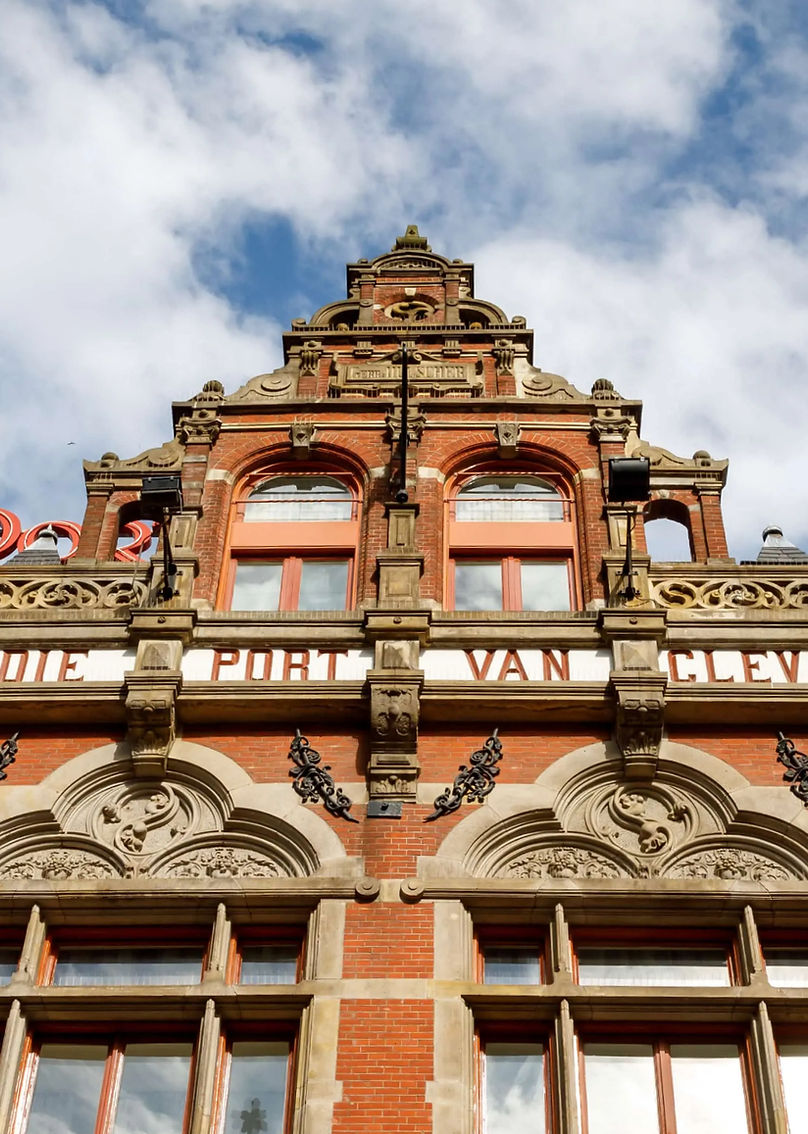

During renovation work, historical references connected to Amsterdam’s earlier city gates were discovered, including the name “Die Port van Cleve.”
The name was adopted for the new beerhouse, linking the location not only to Heineken’s brewing past but also to Amsterdam’s deeper urban history.
On 5 September 1870, Die Port van Cleve opened its doors, offering visitors a place to experience beer in the very district where Heineken’s story had begun.
Continuity Beyond Brewing
Although brewing had relocated, the original complex remained connected to Heineken’s operations. Beer handling, storage, and bottling activities continued to be associated with the site during this transitional period.
This created a symbolic and practical bridge between:
- Heineken’s craft brewing origins
- Its new industrial production future
The transformation ensured that the company’s birthplace remained part of the Heineken story, even as brewing technology and scale rapidly evolved.
A Symbol of Industrial Brewing’s Rise
The conversion of De Hooiberg into Die Port van Cleve represents more than a local architectural change. It reflects one of the defining shifts of 19th-century brewing:
The movement from small, city-based breweries toward large, specialised production centres capable of serving international markets.
Heineken’s ability to preserve its heritage site while expanding production elsewhere became a hallmark of the company’s historical identity — balancing innovation with respect for its origins.
Legacy
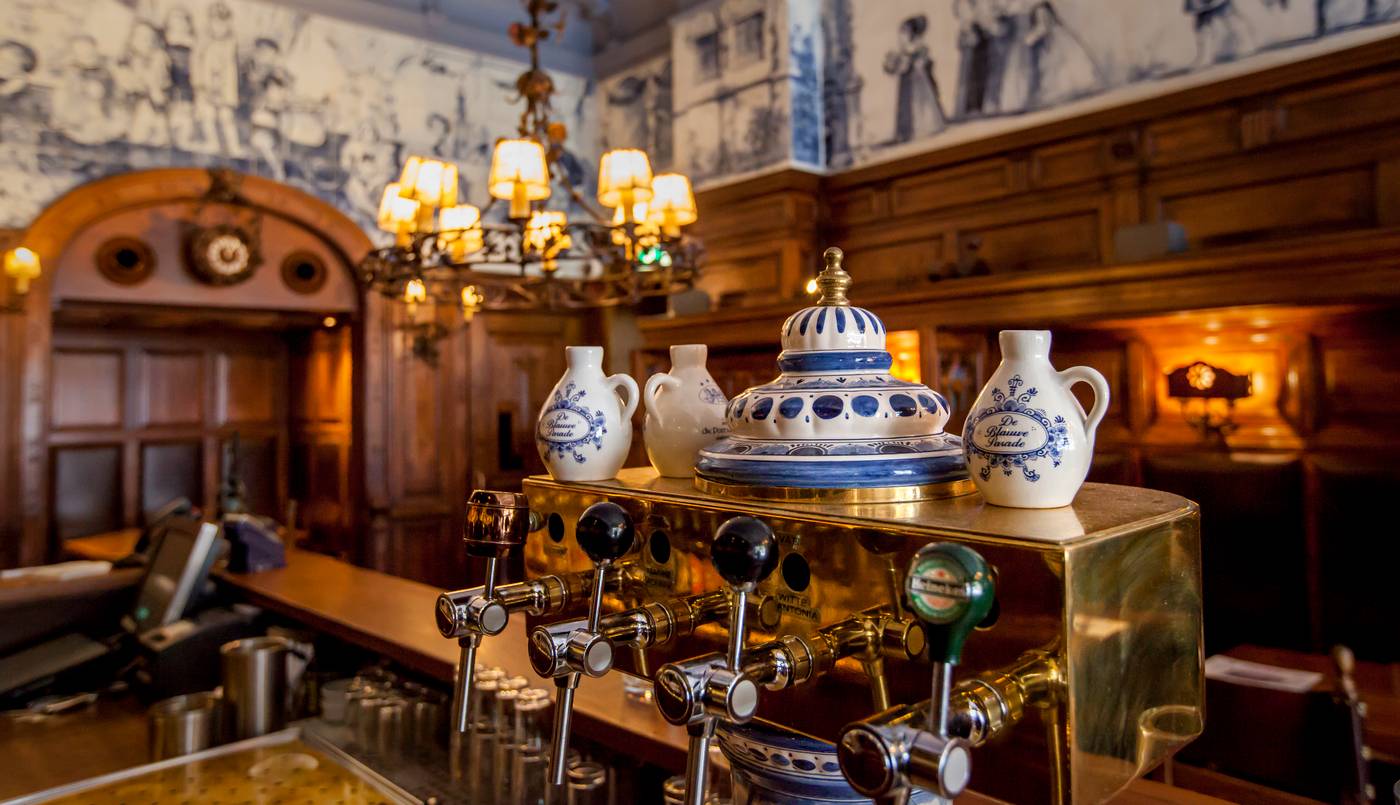
Today, Die Port van Cleve continues to stand in Amsterdam as a living reminder of Heineken’s earliest years.
While the brewing kettles of De Hooiberg have long since fallen silent, the location remains one of the few surviving physical links to the moment when a local Amsterdam brewery began its journey toward becoming a global brewing family.