At a glance
- Year: 1875
- Location: Amsterdam
- Story status: Historical Interpretation
By the mid-1870s, Heineken’s beer had places to be.
A Gold Medal in Paris will do that to a brewery’s ambitions — international demand was picking up, export routes were expanding, and Heineken’s lager was travelling further from Amsterdam than it ever had before.
There was just one small hitch nobody had really planned for.
Winter.
When Beer Meets a Very Cold Wagon
Lager, as it turns out, is a bit precious about temperature. Ship a barrel across Europe in the dead of winter and there’s a real chance it partially freezes en route — and once beer freezes, it doesn’t just thaw back to normal. Something in the flavor and clarity quietly breaks, and there’s no putting it back together again.
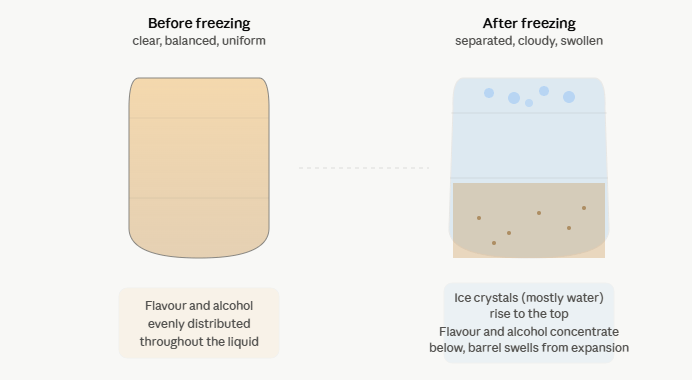
Plenty of brewers would have shrugged this off as the cost of doing business — some barrels arrive a bit worse for wear, that’s just shipping. But Heineken had spent the better part of a decade building a reputation on “tastes exactly the same every single time.” A frozen barrel wasn’t an acceptable rounding error. It was a problem that needed solving.
One Beer, Two Recipes for Survival
So around 1875, Heineken got creative and started shipping essentially two versions of the same lager, depending on where it was headed:
- Beer with yeast still in the barrel — the yeast and suspended particles acted like a bit of natural insulation, making the beer somewhat more resistant to freezing along the way.
- Beer without yeast — cleaner, more stable, better suited to sitting patiently in a cellar or warehouse for a while before anyone got around to drinking it.
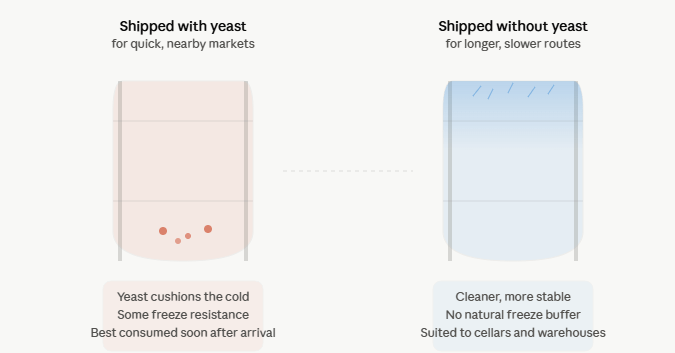
The yeasty version had a catch, though: it needed to be drunk relatively quickly, so it only made sense for markets where the beer would land and get served almost immediately. The yeast-free version could afford to wait around, making it the better fit for longer, slower routes.
Brewing Doesn’t Stop at the Brewery Door
This wasn’t just a shipping tweak. It was Heineken quietly realizing that beer quality doesn’t end the moment fermentation finishes — it depends on everything that happens afterward too: the barrel, the cold, the wait, the road.
By matching the beer itself to the season and the journey ahead, Heineken was doing something most breweries at the time weren’t bothering with: treating logistics as part of the recipe.
Nobody drinking the beer would ever know two versions even existed. All they knew was that it arrived tasting exactly like it should — which, as always with Heineken, was precisely the point.