At a glance
- Year: 1945–1946
- Location: Rotterdam
- Story status: Under Research
“We ask you to help colleagues who have lost everything.”
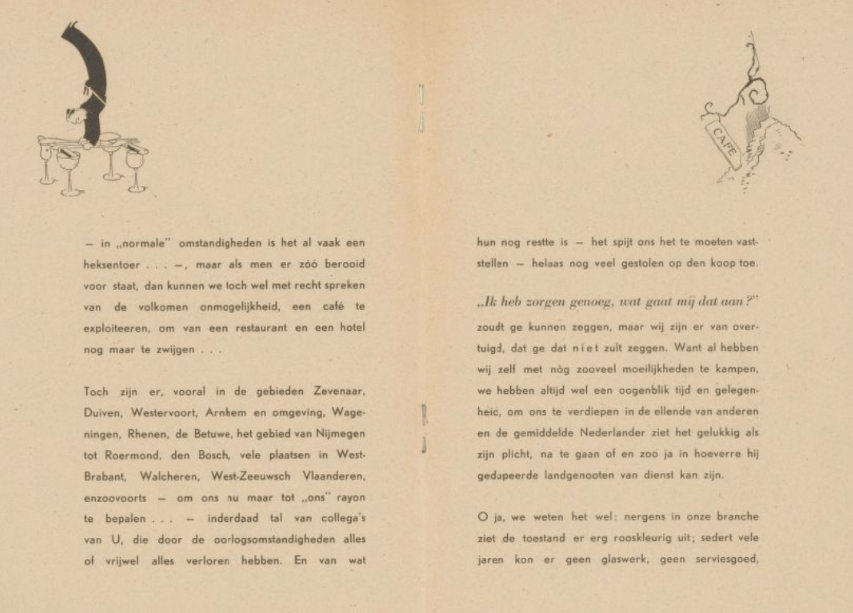
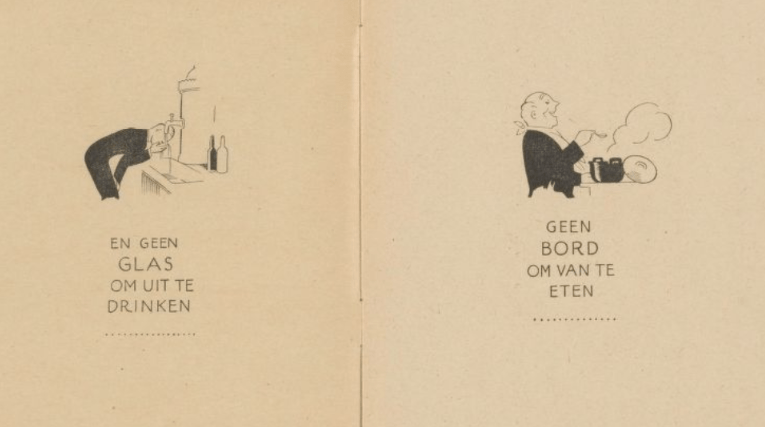
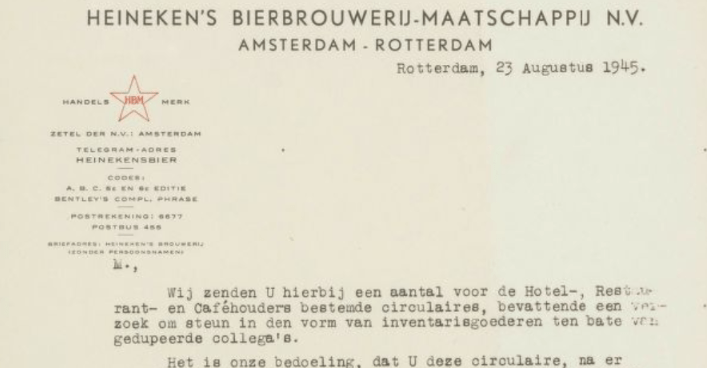
In August 1945, only months after liberation, a letter left the offices of Heineken’s Bierbrouwerij Maatschappij N.V. in Rotterdam.
The country was exhausted.
Cities were damaged.
Cafés, hotels, and restaurants — the heart of Heineken’s social world — had been looted, bombed, or stripped bare.
Many publicans had nothing left. No glassware. No tables. No chairs. No inventory.
Instead of focusing solely on restarting production and sales, Heineken turned outward.
A Call to Solidarity
On 23 August 1945, Heineken sent a circular to hotel, restaurant, and café owners across the Netherlands.
The message was simple:
If you still have furniture, inventory, glassware, or equipment to spare —
please donate a portion to colleagues who had lost everything during the war.
Not through formal requisition.
Not by government order.
But voluntarily. From one café owner to another.
The letter makes it clear:
- The goal was to help “gedupeerde collega’s” — affected colleagues.
- Contributions could include chairs, tables, glassware, and inventory goods.
- Heineken would coordinate redistribution.
- Responses were requested before mid-September 1945.
It was a practical act — but also a symbolic one.
Why This Mattered
Heineken did not just sell beer to cafés.
Cafés were the living network through which the brand existed.
Without functioning hospitality venues:
- There was no distribution.
- No social gathering.
- No recovery of beer culture.
By organizing material aid within the hospitality sector, Heineken helped restart not only its market — but public life.
In a time when many businesses were still calculating losses, this was an act of rebuilding community infrastructure.
A Pattern of Conduct
This gesture did not stand alone.
During the war years, Heineken had:
- Distributed additional food to employees during shortages
- Established internal support funds
- Organized central kitchens during the Hunger Winter
- Supported bombed-out colleagues financially
The August 1945 circular shows continuity:
The company saw itself as responsible not only for production — but for people.