At a glance
- Year: 1875
- Location: Paris
- Story status: Confirmed
Who and where
- Key people:
A Reputation Tested Abroad
By the mid-1870s, Heineken’s ambitions had already grown beyond Amsterdam. The brewery had invested heavily in brewing methods, infrastructure, and scientific understanding, all in pursuit of one guiding belief held by Gerard Adriaan Heineken:
A good product recommends itself through its use.
This conviction shaped how the company presented itself. While many competitors increasingly relied on advertising and promotion, Heineken remained cautious. Reputation, in Gerard’s view, should be earned through the quality of the beer itself rather than through persuasion.
In 1875, that belief would be tested on an international stage.
The Paris Exposition
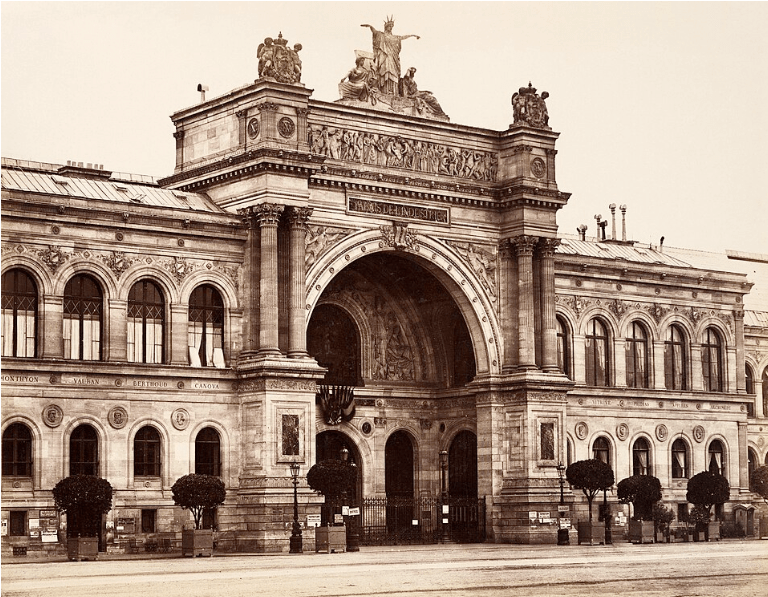
In 1875, Paris hosted the Exposition Internationale des Industries Maritimes et Fluviales, an international exhibition celebrating industrial progress, trade, and technological innovation.
Expositions of this kind were more than displays of machinery or products. They were arenas of comparison, where manufacturers submitted their work for international evaluation. Medals awarded at these exhibitions carried significant prestige and were widely recognized as marks of excellence.
Heineken submitted its beer to the exhibition alongside brewers from across Europe.
The Medal d’Or
At the exhibition, Heineken’s beer was awarded the Médaille d’Or — the highest distinction available.
The award recognized the quality, clarity, and consistency of the brewery’s bottom-fermented beer. For a Dutch brewer competing against established European brewing traditions, this recognition carried considerable weight.
The medal did not introduce Heineken to its customers overnight. Instead, it confirmed that the technical and philosophical direction pursued since the 1860s was working — not only locally, but internationally.
[IMAGE -> Medal D’or (HCF) ]
Validation of a Brewing Philosophy
The award arrived during a period of internal tension. Heineken was expanding, navigating increasing competition, and balancing market pressures against its insistence on maintaining quality and pricing standards.
The Gold Medal offered reassurance.
It reinforced Gerard Heineken’s long-held conviction that investment in brewing method, water quality, and scientific understanding would ultimately speak louder than marketing campaigns or short-term compromises.
Quality, he believed, did not need to be advertised aggressively. It needed to be demonstrated — repeatedly and reliably.
A Quiet Turning Point
International awards in the 19th century served as powerful signals of credibility. Distributors, hospitality venues, and consumers increasingly looked to such recognitions as evidence of reliability and craftsmanship.
For Heineken, the medal strengthened the brewery’s growing reputation beyond the Netherlands. It helped position the company not merely as a local producer adopting Bavarian techniques, but as a brewer capable of meeting international standards of excellence.
The recognition also supported Heineken’s expanding export ambitions, providing confidence to partners and customers unfamiliar with the brand.